
- AboharPunjab, India
- Abu DhabiAbu Dhabi, United Arab Emirates
- AhmedabadGujarat, India
- AjmerRajasthan, India
- AkleraRajasthan, India
- AklujMaharashtra, India
- AlandKarnataka, India
- AlwarRajasthan, India
- AmsterdamNorth Holland, Netherlands
- AnjangaonMaharashtra, India
- AshtaMadhya Pradesh, India
- AtlantaGeorgia, United States
- AucklandAuckland, New Zealand
- AuraiyaUttar Pradesh, India
- AzamgarhUttar Pradesh, India
- BaberuUttar Pradesh, India
- BagulaWest Bengal, India
- BandikuiRajasthan, India
- BandungWest Java, Indonesia
- BangkokBangkok, Thailand
- BarahiyaBihar, India
- BaripadaOdisha, India
- BarkheraUttar Pradesh, India
- BarnalaPunjab, India
- BegusaraiBihar, India
- BehrorRajasthan, India
- BengaluruKarnataka, India
- BeriHaryana, India
- BhavnagarGujarat, India
- BhilwaraRajasthan, India
- BhimavaramAndhra Pradesh, India
- BhopalMadhya Pradesh, India
- BhubaneswarOdisha, India
- BidhunaUttar Pradesh, India
- Bihar SharifBihar, India
- BikanerRajasthan, India
- BirminghamEngland, United Kingdom
- Boria KamalpurHaryana, India
- BostonMassachusetts, United States
- BrisbaneQueensland, Australia
- BulandshahrUttar Pradesh, India
- BurhanpurMadhya Pradesh, India
- CalgaryAlberta, Canada
- CelinaTexas, United States
- ChaibasaJharkhand, India
- ChandausiUttar Pradesh, India
- ChandigarhChandigarh, India
- Charkhi DadriHaryana, India
- CharlotteNorth Carolina, United States
- ChennaiTamil Nadu, India
- ChicagoIllinois, United States
- CoimbatoreTamil Nadu, India
- CookevilleTennessee, United States
- DahejGujarat, India
- DallasTexas, United States
- DatiaMadhya Pradesh, India
- DelhiDelhi, India
- DenpasarBali, Indonesia
- DeogharJharkhand, India
- DeoriaUttar Pradesh, India
- DetroitMichigan, United States
- DhanbadJharkhand, India
- DhandhukaGujarat, India
- DholpurRajasthan, India
- DohaDoha, Qatar
- DubaiDubai, United Arab Emirates
- DurbanKwaZulu-Natal, South Africa
- DuvvurAndhra Pradesh, India
- DwarkaGujarat, India
- EdisonNew Jersey, United States
- EdmontonAlberta, Canada
- FaizabadUttar Pradesh, India
- FarrukhabadUttar Pradesh, India
- FrankfurtHesse, Germany
- GandhidhamGujarat, India
- Ganj BasodaMadhya Pradesh, India
- GondalGujarat, India
- GuwahatiAssam, India
- HalwaraPunjab, India
- HaridwarUttarakhand, India
- HazaribaghJharkhand, India
- HisarHaryana, India
- Hong KongHong Kong, Hong Kong
- HoustonTexas, United States
- HyderabadTelangana, India
- IgatpuriMaharashtra, India
- IndoreMadhya Pradesh, India
- JabalpurMadhya Pradesh, India
- JaipurRajasthan, India
- JakartaJakarta, Indonesia
- JalandharPunjab, India
- JalesarUttar Pradesh, India
- JalgaonMaharashtra, India
- JalnaMaharashtra, India
- JamnagarGujarat, India
- JasidihJharkhand, India
- JawalamukhiHimachal Pradesh, India
- JindHaryana, India
- JodhpurRajasthan, India
- JohannesburgGauteng, South Africa
- KanpurUttar Pradesh, India
- KhambhatGujarat, India
- KhopoliMaharashtra, India
- KochiKerala, India
- KolkataWest Bengal, India
- Kuala LumpurFederal Territory, Malaysia
- KurundwadMaharashtra, India
- LeicesterEngland, United Kingdom
- LondonEngland, United Kingdom
- Los AngelesCalifornia, United States
- LucknowUttar Pradesh, India
- LudhianaPunjab, India
- MaduraiTamil Nadu, India
- MalkapurMaharashtra, India
- MaloutPunjab, India
- ManchesterEngland, United Kingdom
- MangaluruKarnataka, India
- MathuraUttar Pradesh, India
- MavliRajasthan, India
- MechanicsburgPennsylvania, United States
- MeerutUttar Pradesh, India
- MehsanaGujarat, India
- MelbourneVictoria, Australia
- MiamiFlorida, United States
- MinneapolisMinnesota, United States
- MississaugaOntario, Canada
- MogaPunjab, India
- MorbiGujarat, India
- MumbaiMaharashtra, India
- MurtajapurMaharashtra, India
- MuscatMuscat, Oman
- MysuruKarnataka, India
- NagpurMaharashtra, India
- NanduraMaharashtra, India
- NashikMaharashtra, India
- NeamatpurWest Bengal, India
- New YorkNew York, United States
- NippaniKarnataka, India
- NiraMaharashtra, India
- NowgongMadhya Pradesh, India
- OraiUttar Pradesh, India
- ParisÎle-de-France, France
- PatialaPunjab, India
- PatnaBihar, India
- PeddapalliTelangana, India
- PerthWestern Australia, Australia
- PhiladelphiaPennsylvania, United States
- PhoenixArizona, United States
- PrayagrajUttar Pradesh, India
- PuneMaharashtra, India
- PuriOdisha, India
- PutturKarnataka, India
- RaipurChhattisgarh, India
- RajamahendravaramAndhra Pradesh, India
- RajkotGujarat, India
- Ramgarh CantonmentJharkhand, India
- ReadingPennsylvania, United States
- RishikeshUttarakhand, India
- RiyadhRiyadh, Saudi Arabia
- SaharanpurUttar Pradesh, India
- San FranciscoCalifornia, United States
- San JoseCalifornia, United States
- SarupatharAssam, India
- SeattleWashington, United States
- SendhwaMadhya Pradesh, India
- ShikaripurKarnataka, India
- ShikarpurUttar Pradesh, India
- ShirdiMaharashtra, India
- SingaporeSingapore, Singapore
- SuratGujarat, India
- SurendranagarGujarat, India
- SydneyNew South Wales, Australia
- ThanesarHaryana, India
- TilakwadaGujarat, India
- TirupatiAndhra Pradesh, India
- TiruvannamalaiTamil Nadu, India
- TorontoOntario, Canada
- UdalguriAssam, India
- UjjainMadhya Pradesh, India
- UkiahCalifornia, United States
- UnjhaGujarat, India
- VadodaraGujarat, India
- VancouverBritish Columbia, Canada
- VaranasiUttar Pradesh, India
- VisakhapatnamAndhra Pradesh, India
- VisnagarGujarat, India
- VrindavanUttar Pradesh, India
- WanaparthyTelangana, India
- WashingtonDistrict of Columbia, United States
- ZurichZurich, Switzerland
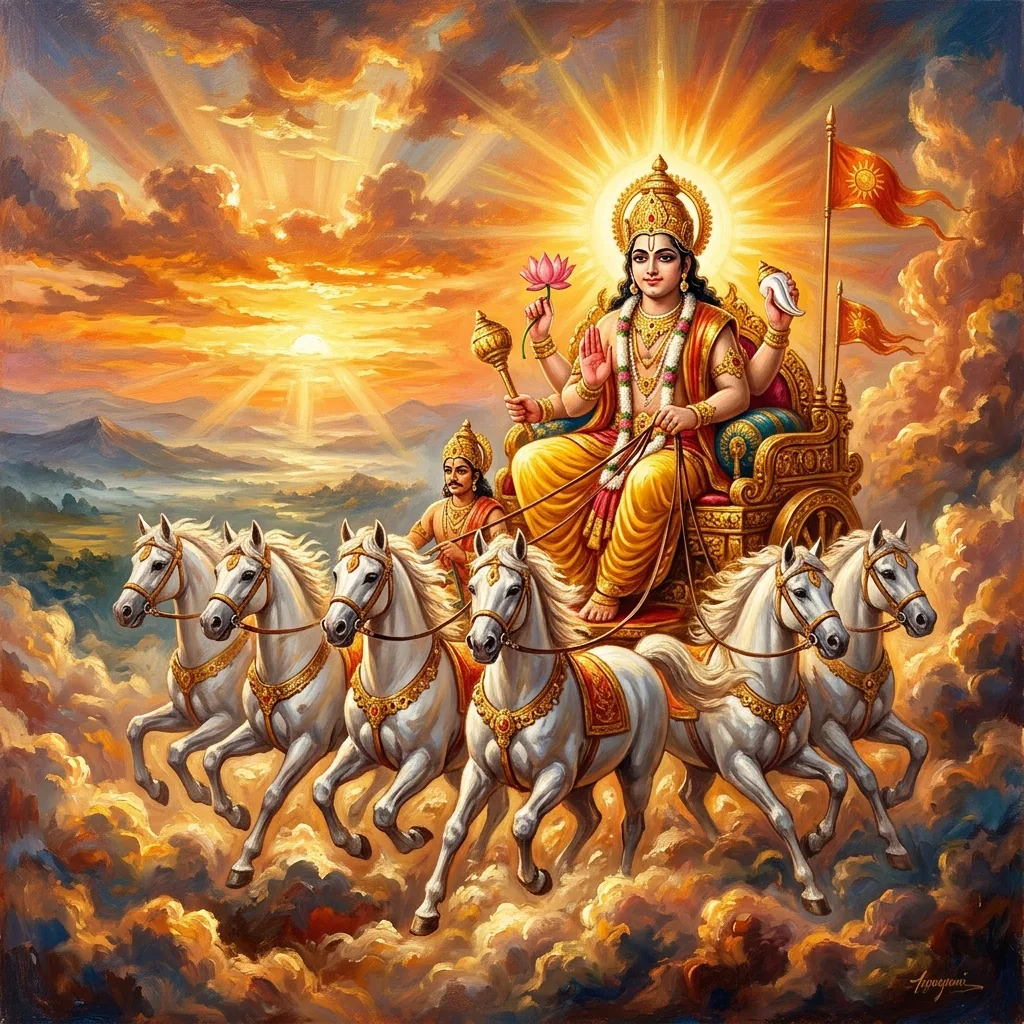
Sandhya Arghya
Do
- Keep the prasad and the kitchen pure; make the prasad at home if you can (practice)
- Help the vratin carry the offerings and keep the ghat clean (practice)
- Many vratins sleep on the floor through the vrat (practice)
Don’t
- Taste the prasad before it is offered (practice)
- Cook onion, garlic or anything impure in the house during the vrat (practice)
- Keep a dry fast against your doctor's advice (practice)
Aarti, mantra and katha
Each one opens the same screen in Vandan
Four-day festival of sun worship; especially observed in Bihar and Eastern India.
Samagri
Deity & setup
- Coconutपानी वाला
- Kalash (pot)clay or brass
Bath & purification
- Milk
- Water
- Copper lota
Adornment & offerings
- Sindoor
- Roli
- Akshat (unbroken rice)
- Flowers
- Betel leaves (paan)
- Betel nut (supari)
Lamp & incense
- Diya (lamp)
- Dhoop (incense)
- Camphor (kapur)
- Matches
Bhog
- Thekua
- Wheat flour (atta)
- Jaggery (gur)
- Ghee
- Dried coconut (gola)
- Fennel (saunf)
- Cardamom
- Kasar
- Fruit
- Bananas
- Sugarcane
- Dabh nimbu (large citron)
- Water chestnut (singhara)
- Radish
- Sweet potato
- Suthni
- Apple
- Orange
- Pear
- Rice flour
- Jaggery (gur)
Festival-specific
- Bamboo soop (winnowing basket)× 1 / 5one per vratin
- Bamboo daura (large basket)
- Fresh ginger and turmeric plants
- New or clean clothes for the one keeping the vrat
Puja Vidhi
• Bamboo soop (winnowing basket) – one per vratin (1, 5 or more as per the family's vow) • Bamboo daura (large basket) • Thekua – wheat flour, jaggery, pure ghee, dry coconut, fennel (saunf), cardamom • Kasar (laddoos of rice flour and jaggery) • Fruits – a full bunch of bananas, sugarcane, coconut (with water), dabh nimbu (large citron), water chestnut (singhara), radish, sweet potato, suthni, apple, orange, pear • Fresh ginger and turmeric plants • Sindoor, roli, akshat, flowers, paan, supari • Ghee lamps, dhoop, camphor, matches • Milk and water for arghya – brass or copper lota • Kalash (clay or brass) • New clothes for the vratin
• After the morning bath, prepare thekua and kasar with complete purity. • Thekua: Knead a stiff dough of wheat flour with jaggery water, ghee, grated coconut and fennel. Shape it on a mould and fry it slowly in pure ghee. • Do not taste anything while preparing the prasad.
• In each soop, place thekua, kasar, all the fruits, ginger and turmeric plants, paan-supari, sindoor and flowers. Arrange all the soops in the daura.
• In the afternoon, the men of the family carry the daura on their heads to the ghat. The vratin walks barefoot. Sing Chhathi Maiya songs along the way.
• Clean a spot at the ghat. Make a small clay altar (vedi) and mark Chhathi Maiya's place on it with sindoor. • Place the kalash and light ghee lamps. Arrange the soops in front of the vedi.
• Take a little water in the right palm and sip it three times: "Om Keshavaya Namah", "Om Narayanaya Namah", "Om Madhavaya Namah"; then wash the hands: "Om Hrishikeshaya Namah" • Hold water in the left hand and sprinkle it with the right hand on yourself and the samagri: • "Om Apavitrah Pavitro Va Sarvavastham Gato'pi Va, Yah Smaret Pundarikaksham Sa Bahyabhyantarah Shuchih."
• "I, (name), of (gotra) gotra, on this Kartik Shukla Shashthi, offer the Sandhya Arghya to Chhathi Maiya and the setting Surya Dev."
• "Shashthamsham Prakriteh Shuddham Supratishtham Cha Suvratam, Suputradam Cha Shubhadam Dayarupam Jagatprasum." • "Om Shashthi Devyai Namah"
• Before sunset, the vratin bathes in the water and stands waist-deep, facing west (the setting sun).
• The vratin raises the soop with both hands towards Surya Dev. Family members pour a stream of milk and water from the lota over the soop as arghya: • "Om Ehi Surya Sahasramsho Tejorashe Jagatpate, Anukampaya Mam Bhaktya Grihanarghyam Divakara." • "Om Ghrini Suryaya Namah" • Offer arghya separately from each soop.
• After the arghya, holding the soop, circle 3 or 5 times in the water and bow to Surya Dev.
• After sunset, return home with the daura. Keep the prasad in the soops safe for the next dawn.
• At night, tie 5 or 7 sugarcanes together to form a canopy in the courtyard or on the terrace. Under it, place a clay elephant (hathi) or kosi (clay lamp-pot), lamps and soops filled with prasad. • Light the lamps and sing Chhathi Maiya songs through the night. Many families also do this at the ghat before dawn.
Guide
Chhath Puja
The day
- Kartika Shukla Shashthi, six days after Deepavali, is the day of the evening arghya to the setting sun; the vrat closes at sunrise on the Saptami (practice)
- It is the third day of a four-day vrat that begins on the Chaturthi (practice)
The four days
- Chaturthi, nahay-khay: bath and one pure meal (practice)
- Panchami, kharna: a day's fast closed in the evening with kheer and roti (practice)
- Shashthi, sandhya arghya: arghya to the setting sun from the water (practice)
- Saptami, usha arghya: arghya to the rising sun, then the parana (practice)
On this page
- The evening arghya window, the dawn arghya window and the parana are worked out for your city.
Sandhya arghya — to the setting sun
When
- On the Shashthi, in the evening window this page shows, which ends at sunset (practice)
Getting ready
- The family carries the offerings to a river, pond or tank in bamboo baskets, the daura and the soop (practice)
- The soop holds thekua, rice laddus, fruits of the season, sugarcane, coconut, a lamp and sindoor (practice)
The arghya
- The vratin stands in the water facing west and holds up the soop to the setting sun (practice)
- Family members pour water or milk over the soop as the arghya (practice)
- Women sing the Chhath songs on the bank as the sun goes down (practice)
After sunset
- The offerings are carried home, and the fast continues through the night (practice)
The fast and the food
Nahay-khay
- On the Chaturthi the vratin bathes, the house is cleaned, and one meal is eaten: rice, chana dal and bottle gourd cooked in ghee with rock salt (practice)
Kharna
- On the Panchami the vratin fasts all day and in the evening eats kheer of rice and jaggery with roti, after offering it (practice)
- From then the fast is nirjala, without food or water, until the parana after the dawn arghya (practice)
The prasad
- Thekua of wheat flour and jaggery, rice laddus and the fruits are made at home with great care for purity, often on a fresh hearth (practice)
- No onion or garlic is cooked in the house through the vrat (practice)
If you cannot keep it dry
- The aged, the unwell and pregnant women may take water or fruit; ask your doctor, and keep the arghyas with the family (practice)
Usha arghya and the parana
Before sunrise
- On the Saptami the family returns to the water before dawn, in the window this page shows, which ends at sunrise (practice)
- The vratin stands in the water facing east and waits for the sun with the soop raised (practice)
The arghya
- As the sun rises, water or milk is poured over the soop as the arghya to the rising sun (practice)
- The vratin prays to the sun and to Chhathi Maiya for the family's health, children and well-being (practice)
Breaking the fast
- After the dawn arghya the vratin breaks the fast, often with the prasad or a little ginger and jaggery, in the parana window this page shows (practice)
- The prasad is shared with family, neighbours and everyone at the ghat (practice)
Why the setting and the rising sun
The sun at dawn and dusk
- An ancient teaching tells of demons who fight the sun from its rising to its setting.
- Those who know the Veda, facing east at sandhya, throw water consecrated with the Gayatri upward, and the water strikes the demons down.
- It says that one who worships the sun as it rises and as it sets, knowing the sun to be Brahman, gains every good.
What this grounds
- This teaching is taken as the rule of the daily sandhya worship and its arghya to the sun.
- Chhath offers its two arghyas at the same two junctions, setting and rising; only that frame, not the rest of the rite, rests on this ancient sun worship.
Who keeps it, and where
Where
- Above all in Bihar, Jharkhand, eastern Uttar Pradesh and the Terai of Nepal, and among families from there wherever they live (practice)
Who
- Mostly women keep the vrat, and many men too; the one who keeps it is called the vratin or parvaitin (practice)
- A family that takes up Chhath usually keeps it year after year (practice)
Chhathi Maiya
- The vrat is offered to the sun and to Chhathi Maiya; accounts of her differ, some calling her the sun's sister and some the goddess Shashthi who guards children (practice)
A second Chhath
- Many families also keep a Chhath in Chaitra, on the bright Shashthi, in the same way (practice)
Festive Food
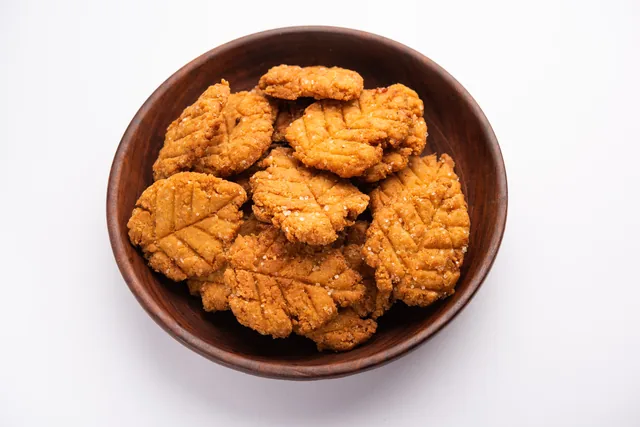 ThekuaRice Laddu (kasar)
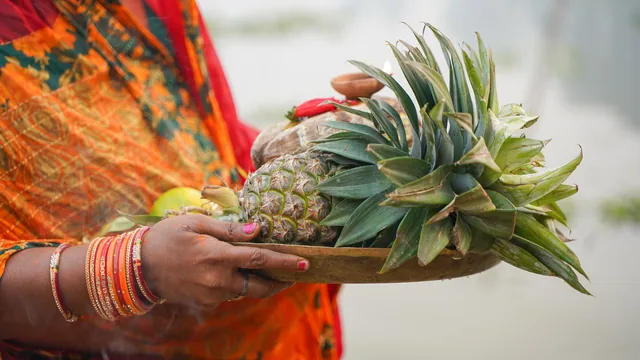 Fruit Prasad (sugarcane, banana, coconut, citron)
Get Sandhya Arghya reminders for Devrān in Vandan
A reminder at the muhurat, the aarti to sing along, the katha to read.