
- AboharPunjab, India
- Abu DhabiAbu Dhabi, United Arab Emirates
- AhmedabadGujarat, India
- AjmerRajasthan, India
- AkleraRajasthan, India
- AklujMaharashtra, India
- AlandKarnataka, India
- AlwarRajasthan, India
- AmsterdamNorth Holland, Netherlands
- AnjangaonMaharashtra, India
- AshtaMadhya Pradesh, India
- AtlantaGeorgia, United States
- AucklandAuckland, New Zealand
- AuraiyaUttar Pradesh, India
- AzamgarhUttar Pradesh, India
- BaberuUttar Pradesh, India
- BagulaWest Bengal, India
- BandikuiRajasthan, India
- BandungWest Java, Indonesia
- BangkokBangkok, Thailand
- BarahiyaBihar, India
- BaripadaOdisha, India
- BarkheraUttar Pradesh, India
- BarnalaPunjab, India
- BegusaraiBihar, India
- BehrorRajasthan, India
- BengaluruKarnataka, India
- BeriHaryana, India
- BhavnagarGujarat, India
- BhilwaraRajasthan, India
- BhimavaramAndhra Pradesh, India
- BhopalMadhya Pradesh, India
- BhubaneswarOdisha, India
- BidhunaUttar Pradesh, India
- Bihar SharifBihar, India
- BikanerRajasthan, India
- BirminghamEngland, United Kingdom
- Boria KamalpurHaryana, India
- BostonMassachusetts, United States
- BrisbaneQueensland, Australia
- BulandshahrUttar Pradesh, India
- BurhanpurMadhya Pradesh, India
- CalgaryAlberta, Canada
- CelinaTexas, United States
- ChaibasaJharkhand, India
- ChandausiUttar Pradesh, India
- ChandigarhChandigarh, India
- Charkhi DadriHaryana, India
- CharlotteNorth Carolina, United States
- ChennaiTamil Nadu, India
- ChicagoIllinois, United States
- CoimbatoreTamil Nadu, India
- CookevilleTennessee, United States
- DahejGujarat, India
- DallasTexas, United States
- DatiaMadhya Pradesh, India
- DelhiDelhi, India
- DenpasarBali, Indonesia
- DeogharJharkhand, India
- DeoriaUttar Pradesh, India
- DetroitMichigan, United States
- DhanbadJharkhand, India
- DhandhukaGujarat, India
- DholpurRajasthan, India
- DohaDoha, Qatar
- DubaiDubai, United Arab Emirates
- DurbanKwaZulu-Natal, South Africa
- DuvvurAndhra Pradesh, India
- DwarkaGujarat, India
- EdisonNew Jersey, United States
- EdmontonAlberta, Canada
- FaizabadUttar Pradesh, India
- FarrukhabadUttar Pradesh, India
- FrankfurtHesse, Germany
- GandhidhamGujarat, India
- Ganj BasodaMadhya Pradesh, India
- GondalGujarat, India
- GuwahatiAssam, India
- HalwaraPunjab, India
- HaridwarUttarakhand, India
- HazaribaghJharkhand, India
- HisarHaryana, India
- Hong KongHong Kong, Hong Kong
- HoustonTexas, United States
- HyderabadTelangana, India
- IgatpuriMaharashtra, India
- IndoreMadhya Pradesh, India
- JabalpurMadhya Pradesh, India
- JaipurRajasthan, India
- JakartaJakarta, Indonesia
- JalandharPunjab, India
- JalesarUttar Pradesh, India
- JalgaonMaharashtra, India
- JalnaMaharashtra, India
- JamnagarGujarat, India
- JasidihJharkhand, India
- JawalamukhiHimachal Pradesh, India
- JindHaryana, India
- JodhpurRajasthan, India
- JohannesburgGauteng, South Africa
- KanpurUttar Pradesh, India
- KhambhatGujarat, India
- KhopoliMaharashtra, India
- KochiKerala, India
- KolkataWest Bengal, India
- Kuala LumpurFederal Territory, Malaysia
- KurundwadMaharashtra, India
- LeicesterEngland, United Kingdom
- LondonEngland, United Kingdom
- Los AngelesCalifornia, United States
- LucknowUttar Pradesh, India
- LudhianaPunjab, India
- MaduraiTamil Nadu, India
- MalkapurMaharashtra, India
- MaloutPunjab, India
- ManchesterEngland, United Kingdom
- MangaluruKarnataka, India
- MathuraUttar Pradesh, India
- MavliRajasthan, India
- MechanicsburgPennsylvania, United States
- MeerutUttar Pradesh, India
- MehsanaGujarat, India
- MelbourneVictoria, Australia
- MiamiFlorida, United States
- MinneapolisMinnesota, United States
- MississaugaOntario, Canada
- MogaPunjab, India
- MorbiGujarat, India
- MumbaiMaharashtra, India
- MurtajapurMaharashtra, India
- MuscatMuscat, Oman
- MysuruKarnataka, India
- NagpurMaharashtra, India
- NanduraMaharashtra, India
- NashikMaharashtra, India
- NeamatpurWest Bengal, India
- New YorkNew York, United States
- NippaniKarnataka, India
- NiraMaharashtra, India
- NowgongMadhya Pradesh, India
- OraiUttar Pradesh, India
- ParisÎle-de-France, France
- PatialaPunjab, India
- PatnaBihar, India
- PeddapalliTelangana, India
- PerthWestern Australia, Australia
- PhiladelphiaPennsylvania, United States
- PhoenixArizona, United States
- PrayagrajUttar Pradesh, India
- PuneMaharashtra, India
- PuriOdisha, India
- PutturKarnataka, India
- RaipurChhattisgarh, India
- RajamahendravaramAndhra Pradesh, India
- RajkotGujarat, India
- Ramgarh CantonmentJharkhand, India
- ReadingPennsylvania, United States
- RishikeshUttarakhand, India
- RiyadhRiyadh, Saudi Arabia
- SaharanpurUttar Pradesh, India
- San FranciscoCalifornia, United States
- San JoseCalifornia, United States
- SarupatharAssam, India
- SeattleWashington, United States
- SendhwaMadhya Pradesh, India
- ShikaripurKarnataka, India
- ShikarpurUttar Pradesh, India
- ShirdiMaharashtra, India
- SingaporeSingapore, Singapore
- SuratGujarat, India
- SurendranagarGujarat, India
- SydneyNew South Wales, Australia
- ThanesarHaryana, India
- TilakwadaGujarat, India
- TirupatiAndhra Pradesh, India
- TiruvannamalaiTamil Nadu, India
- TorontoOntario, Canada
- UdalguriAssam, India
- UjjainMadhya Pradesh, India
- UkiahCalifornia, United States
- UnjhaGujarat, India
- VadodaraGujarat, India
- VancouverBritish Columbia, Canada
- VaranasiUttar Pradesh, India
- VisakhapatnamAndhra Pradesh, India
- VisnagarGujarat, India
- VrindavanUttar Pradesh, India
- WanaparthyTelangana, India
- WashingtonDistrict of Columbia, United States
- ZurichZurich, Switzerland
Diwali Mahaparv


Do
- Take an oil bath in the morning.
- Offer Shraadh in the afternoon if your family keeps it.
- Light lamps at pradosh, and worship Lakshmi and Kubera.
- Show a torch for the forebears, facing south.
- Feed Brahmins and the hungry before you eat.
Don’t
- Eat by day, unless you are a child, old or unwell.
- Leave the house dark tonight (practice)
- Let fireworks endanger people, animals or the old; keep them safe and moderate (practice)
Aarti, mantra and katha
Each one opens the same screen in Vandan
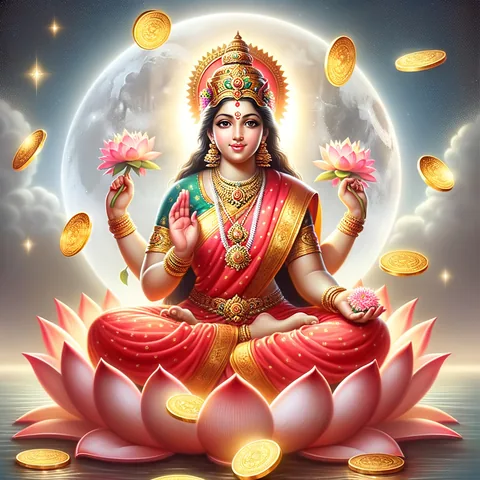
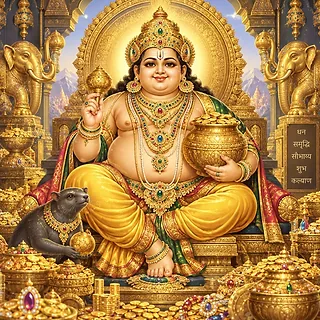


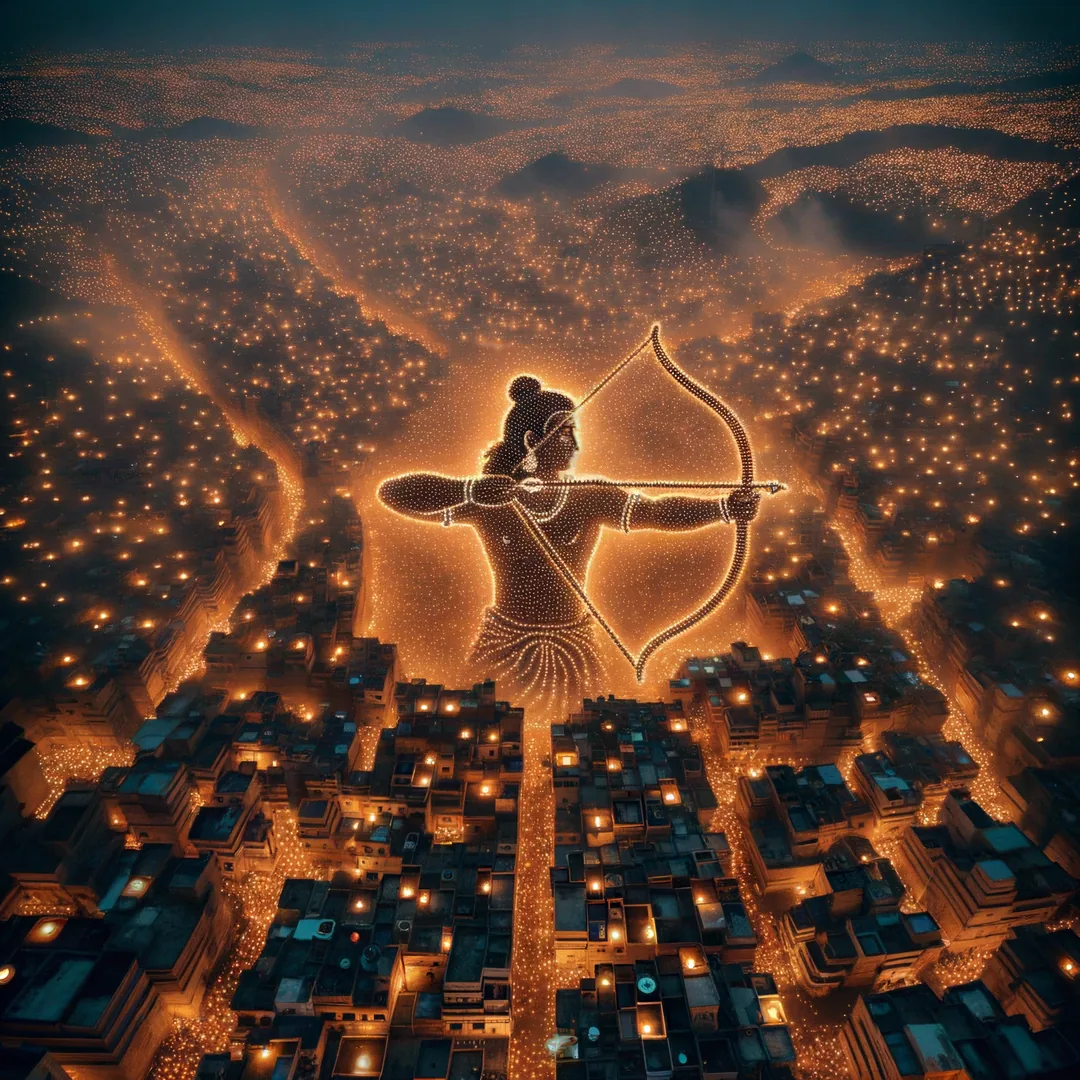

Festival of lights — return of Rama to Ayodhya; Lakshmi puja for prosperity.
Samagri
Deity & setup
- Lakshmi-Ganesh idol or picture
- Cloth for the chowki
- Chowki (low wooden seat)
- Kalash (pot)
- Mango leaves
- Coconut
Bath & purification
- Panchamrit
- Milk
- Curd
- Ghee
- Honey
- Sugar
- Copper lota
- Achamani (small spoon)
Adornment & offerings
- Roli
- Haldi (turmeric)
- Chandan (sandal paste)
- Akshat (unbroken rice)
- Kalava (mauli)
- Flowers
- Lotus flowers
- Marigold
- Flower garland
- Durva grassfor Ganesh ji
- Betel leaves (paan)
- Betel nut (supari)
- Cloves
- Cardamom
Lamp & incense
- Diya (lamp)
- Dhoop (incense)
- Camphor (kapur)
- Matches
Bhog
- Kheer
- Kheel (puffed rice)
- Batashe (sugar drops)
- Sweets (mithai)
- Fruit
Festival-specific
- Coins for the puja
- Jewellery (the household's own)
- Account book (bahi)
- Pen (lekhani)
Puja Vidhi
• A Lakshmi-Ganesh idol or picture, a chowki spread with red cloth, a kalash filled with water (mango leaves, a coconut) • A ghee lamp, an oil lamp, dhoop/incense sticks, camphor, matches • Roli/kumkum, haldi, sandal paste, akshat (unbroken rice), kalava (sacred thread) • Flowers (lotus/red flowers/marigold), a garland, durva grass (for Ganesh ji) • Panchamrit (milk, curd, ghee, honey, sugar), a lota of clean water, an achamani or a spoon • Bhog: kheer, kheel-batashe, sweets, fruit • Paan, supari, cloves, cardamom, coins, jewellery, the account books, a pen
• Sit facing east or north. • The idol should be in the east or north-east, with Ganesh ji to Lakshmi ji's left.
• Take a little water in your right palm and sip it three times: • "ॐ केशवाय नमः" • "ॐ नारायणाय नमः" • "ॐ माधवाय नमः" • Then wash your hands: "ॐ हृषीकेशाय नमः"
• Take water in your left hand and, with your right hand, sprinkle it over yourself and the puja samagri: • "ॐ अपवित्रः पवित्रो वा सर्वावस्थां गतोऽपि वा। यः स्मरेत् पुण्डरीकाक्षं स बाह्याभ्यन्तरः शुचिः॥"
• Sprinkle water on your asan: • "ॐ पृथ्वि त्वया धृता लोका देवि त्वं विष्णुना धृता। त्वं च धारय मां देवि पवित्रं कुरु चासनम्॥"
• Place the main ghee lamp towards the north-east, that is, on the deity's right, and the oil lamp on the left. • Light the lamp and offer it akshat and a flower: • "शुभं करोति कल्याणम् आरोग्यं धनसम्पदा। शत्रुबुद्धिविनाशाय दीपज्योतिर्नमोऽस्तु ते॥"
• Apply a roli tilak on your forehead. • Men tie the kalava on the right wrist, women on the left.
• Holding water, akshat, a flower and a coin in your right hand, say: • "I, (your name), of the (gotra) gotra, today on Kartik Amavasya, on the auspicious occasion of Deepavali, am performing the puja of Shri Ganesh, Maa Mahalakshmi and Kuber ji for the happiness, health and lasting prosperity of my family." • Then release it all before the deity.
• Dhyana: "वक्रतुण्ड महाकाय सूर्यकोटि समप्रभ। निर्विघ्नं कुरु मे देव सर्वकार्येषु सर्वदा॥" • Sprinkle water, then offer roli, akshat, durva, flowers and laddoo/modak. • Chant three times: "ॐ गं गणपतये नमः"
• Offer roli, akshat and flowers on the kalash: "ॐ वरुणाय नमः"
• Avahan (invocation) — with folded hands, say: "ॐ श्रीं महालक्ष्म्यै नमः। आवाहयामि, स्थापयामि।" • Then make each offering while saying "ॐ महालक्ष्म्यै नमः": • 1. Asan — one flower • 2. Padya, arghya, achaman — water, three times • 3. Snan (bath) — panchamrit, then clean water (over the idol; on a picture, a sprinkle) • 4. Vastra (cloth) — kalava or a red chunari • 5. Gandha — sandal paste, kumkum, sindoor • 6. Akshat • 7. Pushpa and mala — lotus or red flowers • 8. Dhoop — show the incense • 9. Deep — show the lamp
• Place the thali of kheer, kheel-batashe, sweets and fruit before Maa. • Circle water around the thali, place one flower on it (not tulsi), and say: "ॐ महालक्ष्म्यै नमः। नैवेद्यं निवेदयामि।" • Then offer water for achaman. • Tambool: paan, supari, cloves, cardamom. • Dakshina: coins.
• Draw a swastik in roli on the safe, the account books and the pen, and write "श्री गणेशाय नमः" and "शुभ-लाभ" in the account book. • Place coins and jewellery before Maa: "ॐ कुबेराय नमः"
• Chant 11 or 108 times, or recite the Shri Sukta: • "ॐ श्रीं ह्रीं श्रीं कमले कमलालये प्रसीद प्रसीद श्रीं ह्रीं श्रीं ॐ महालक्ष्म्यै नमः"
• With the whole family, ringing the bell: "ॐ जय लक्ष्मी माता" and "जय गणेश जय गणेश देवा" • At the end: "कर्पूरगौरं करुणावतारं संसारसारं भुजगेन्द्रहारम्। सदा वसन्तं हृदयारविन्दे भवं भवानीसहितं नमामि॥" • Wave the lamp clockwise: 4 times at the feet, 2 at the navel, 1 at the face, then 7 times over the whole form. • After the aarti, sprinkle water on everyone and take the aarti.
• Take flowers in your hands and offer them: • "आवाहनं न जानामि न जानामि विसर्जनम्। पूजां चैव न जानामि क्षमस्व परमेश्वरि॥"
• From the puja lamp, light the lamps of the whole house: the main door, every window, the balcony, the tulsi, the kitchen and the water place. • One lamp in the south for the ancestors (ulka deepdaan). • Share the prasad and eat together as a family.
• Do not do Lakshmi ji's visarjan tonight. Leave the idol or picture in its place. • Keep one akhand lamp burning through the night, and do not leave the house dark. • Do not offer tulsi to Ganesh ji. • At Nishita Kaal, chant the Lakshmi mantra again.
Guide
Today: Diwali
What the day is
- The Amavasya, the new moon, of the month the north calls Kartika — the heart of the lamp festival.
- The day has its order: an oil bath in the morning, Shraadh for the forebears in the afternoon, and at pradosh the lamps, the torches and the Lakshmi puja.
What to do today
- Take an oil bath in the morning and worship the household gods.
- Keep a fast by day if you are able, and offer Shraadh in the afternoon if your family keeps it.
- At pradosh, in the window this page shows, light the lamps and worship Lakshmi.
Lakshmi puja — at pradosh
Puja samagri (keep it ready on the thali)
- A Lakshmi-Ganesh idol or picture, a chowki spread with red cloth, a kalash filled with water (mango leaves, a coconut)
- A ghee lamp, an oil lamp, dhoop/incense sticks, camphor, matches
- Roli/kumkum, haldi, sandal paste, akshat (unbroken rice), kalava (sacred thread)
- Flowers (lotus/red flowers/marigold), a garland, durva grass (for Ganesh ji)
- Panchamrit (milk, curd, ghee, honey, sugar), a lota of clean water, an achamani or a spoon
- Bhog: kheer, kheel-batashe, sweets, fruit
- Paan, supari, cloves, cardamom, coins, jewellery, the account books, a pen
Take your seat
- Sit facing east or north.
- The idol should be in the east or north-east, with Ganesh ji to Lakshmi ji's left.
Achaman (inner purification)
- Take a little water in your right palm and sip it three times:
- "ॐ केशवाय नमः"
- "ॐ नारायणाय नमः"
- "ॐ माधवाय नमः"
- Then wash your hands: "ॐ हृषीकेशाय नमः"
Pavitrikaran (purification)
- Take water in your left hand and, with your right hand, sprinkle it over yourself and the puja samagri:
- "ॐ अपवित्रः पवित्रो वा सर्वावस्थां गतोऽपि वा। यः स्मरेत् पुण्डरीकाक्षं स बाह्याभ्यन्तरः शुचिः॥"
Purifying the seat
- Sprinkle water on your asan:
- "ॐ पृथ्वि त्वया धृता लोका देवि त्वं विष्णुना धृता। त्वं च धारय मां देवि पवित्रं कुरु चासनम्॥"
Lighting the lamp
- Place the main ghee lamp towards the north-east, that is, on the deity's right, and the oil lamp on the left.
- Light the lamp and offer it akshat and a flower:
- "शुभं करोति कल्याणम् आरोग्यं धनसम्पदा। शत्रुबुद्धिविनाशाय दीपज्योतिर्नमोऽस्तु ते॥"
Tilak and kalava
- Apply a roli tilak on your forehead.
- Men tie the kalava on the right wrist, women on the left.
Sankalp (the resolve)
- Holding water, akshat, a flower and a coin in your right hand, say:
- "I, (your name), of the (gotra) gotra, today on Kartik Amavasya, on the auspicious occasion of Deepavali, am performing the puja of Shri Ganesh, Maa Mahalakshmi and Kuber ji for the happiness, health and lasting prosperity of my family."
- Then release it all before the deity.
Shri Ganesh puja (always first)
- Dhyana: "वक्रतुण्ड महाकाय सूर्यकोटि समप्रभ। निर्विघ्नं कुरु मे देव सर्वकार्येषु सर्वदा॥"
- Sprinkle water, then offer roli, akshat, durva, flowers and laddoo/modak.
- Chant three times: "ॐ गं गणपतये नमः"
Kalash puja
- Offer roli, akshat and flowers on the kalash: "ॐ वरुणाय नमः"
Maa Lakshmi puja
- Avahan (invocation) — with folded hands, say: "ॐ श्रीं महालक्ष्म्यै नमः। आवाहयामि, स्थापयामि।"
- Then make each offering while saying "ॐ महालक्ष्म्यै नमः":
- 1. Asan — one flower
- 2. Padya, arghya, achaman — water, three times
- 3. Snan (bath) — panchamrit, then clean water (over the idol; on a picture, a sprinkle)
- 4. Vastra (cloth) — kalava or a red chunari
- 5. Gandha — sandal paste, kumkum, sindoor
- 6. Akshat
- 7. Pushpa and mala — lotus or red flowers
- 8. Dhoop — show the incense
- 9. Deep — show the lamp
Bhog (naivedya)
- Place the thali of kheer, kheel-batashe, sweets and fruit before Maa.
- Circle water around the thali, place one flower on it (not tulsi), and say: "ॐ महालक्ष्म्यै नमः। नैवेद्यं निवेदयामि।"
- Then offer water for achaman.
- Tambool: paan, supari, cloves, cardamom.
- Dakshina: coins.
Kuber and account-book puja
- Draw a swastik in roli on the safe, the account books and the pen, and write "श्री गणेशाय नमः" and "शुभ-लाभ" in the account book.
- Place coins and jewellery before Maa: "ॐ कुबेराय नमः"
Mantra jaap
- Chant 11 or 108 times, or recite the Shri Sukta:
- "ॐ श्रीं ह्रीं श्रीं कमले कमलालये प्रसीद प्रसीद श्रीं ह्रीं श्रीं ॐ महालक्ष्म्यै नमः"
Aarti
- With the whole family, ringing the bell: "ॐ जय लक्ष्मी माता" and "जय गणेश जय गणेश देवा"
- At the end: "कर्पूरगौरं करुणावतारं संसारसारं भुजगेन्द्रहारम्। सदा वसन्तं हृदयारविन्दे भवं भवानीसहितं नमामि॥"
- Wave the lamp clockwise: 4 times at the feet, 2 at the navel, 1 at the face, then 7 times over the whole form.
- After the aarti, sprinkle water on everyone and take the aarti.
Pushpanjali and kshama prarthana
- Take flowers in your hands and offer them:
- "आवाहनं न जानामि न जानामि विसर्जनम्। पूजां चैव न जानामि क्षमस्व परमेश्वरि॥"
Deepdaan and prasad
- From the puja lamp, light the lamps of the whole house: the main door, every window, the balcony, the tulsi, the kitchen and the water place.
- One lamp in the south for the ancestors (ulka deepdaan).
- Share the prasad and eat together as a family.
Keep in mind
- Do not do Lakshmi ji's visarjan tonight. Leave the idol or picture in its place.
- Keep one akhand lamp burning through the night, and do not leave the house dark.
- Do not offer tulsi to Ganesh ji.
- At Nishita Kaal, chant the Lakshmi mantra again.
The day's fast and the night meal
By day
- Do not eat by day, except children, the old and the sick.
- In the afternoon, those who keep it offer parvana Shraadh to the forebears with curd, milk and ghee.
At night
- After the lamps and the Lakshmi puja, first feed Brahmins and anyone hungry, then eat with family and friends.
- Eat adorned and in new clothes; white garments are preferred.
Sweets
- Homes prepare sweets to offer and to share with neighbours (practice)
Lamps, torches, and the night's close
Deepa-dana
- At pradosh, set lamps through the house and at temples, crossroads, riverbanks, cowsheds and market places; such rows of lamps are called lamp-trees.
- The name comes from this: lamps waved in worship make it Deepavali.
Torches for the forebears
- Light a torch facing south, with the sacred thread over the right shoulder, to show the forebears their way; in Bengal it is shown with its own prayers.
Driving out Alakshmi
- After nishita, the deep middle of the night, the women of the house drive Alakshmi, ill fortune, out of the courtyard with the sound of a winnowing fan and a drum.
- In many homes today a lamp is kept burning through the night instead (practice)
Why Diwali
Lakshmi's night
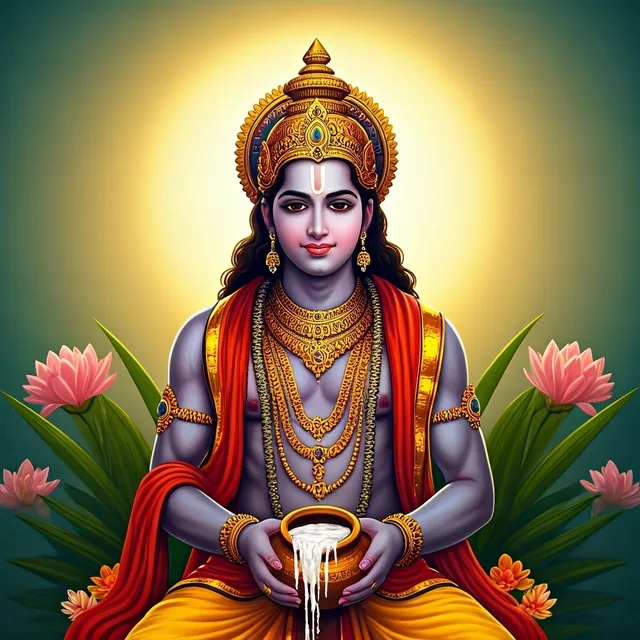
- On this new moon, it is said, the gods were freed from fear by Vishnu, and Lakshmi slept at ease in the lotus; so tonight her rest and her welcome are kept.
- In Bengal the night is called Sukharatri, the night of ease.
Lamps for gods and forebears
- The lamps honour the gods, guide the forebears home, and keep Lakshmi steady in the house; lamps lit in Bali's reign keep her from leaving.
Three days
- Diwali Amavasya is the middle of the three days of Dipotsava, from the Chaturdashi to the bright Pratipada.
Which day, and why this tithi
The rule
- The Lakshmi puja needs the Amavasya at pradosh, and the day is chosen by that.
- When the Amavasya holds at pradosh on the later day, or on both days, the later day is taken; when only the earlier day has it, the Lakshmi puja is done that evening and the morning oil bath on the next day.
- One more measure: when the Amavasya runs a ghatika into the night on the later day, Sukharatri is kept then.
When neither evening has it
- One view takes the later day when the Amavasya lasts long enough on it; schools differ in this rare case.
Swati
- On whichever of the three days the moon is in Swati, that day is the most auspicious.
On this page
- The date and the pradosh window are worked out from this rule for your city.
The kathas
Lakshmi freed
- Vishnu freed the gods and Lakshmi from Bali's prison; they rested on the ocean of milk, and so tonight Lakshmi is given a soft bed and worshipped at her ease.
Bali and Vamana
- Vishnu as Vamana asked Bali for three steps of earth, gave the worlds back to Indra and sent Bali to the underworld; in return he granted Bali three days of rule on earth, from this Chaturdashi to the Pratipada.
- Lamps lit in Bali's reign keep Lakshmi steady in the home.
Rama's return
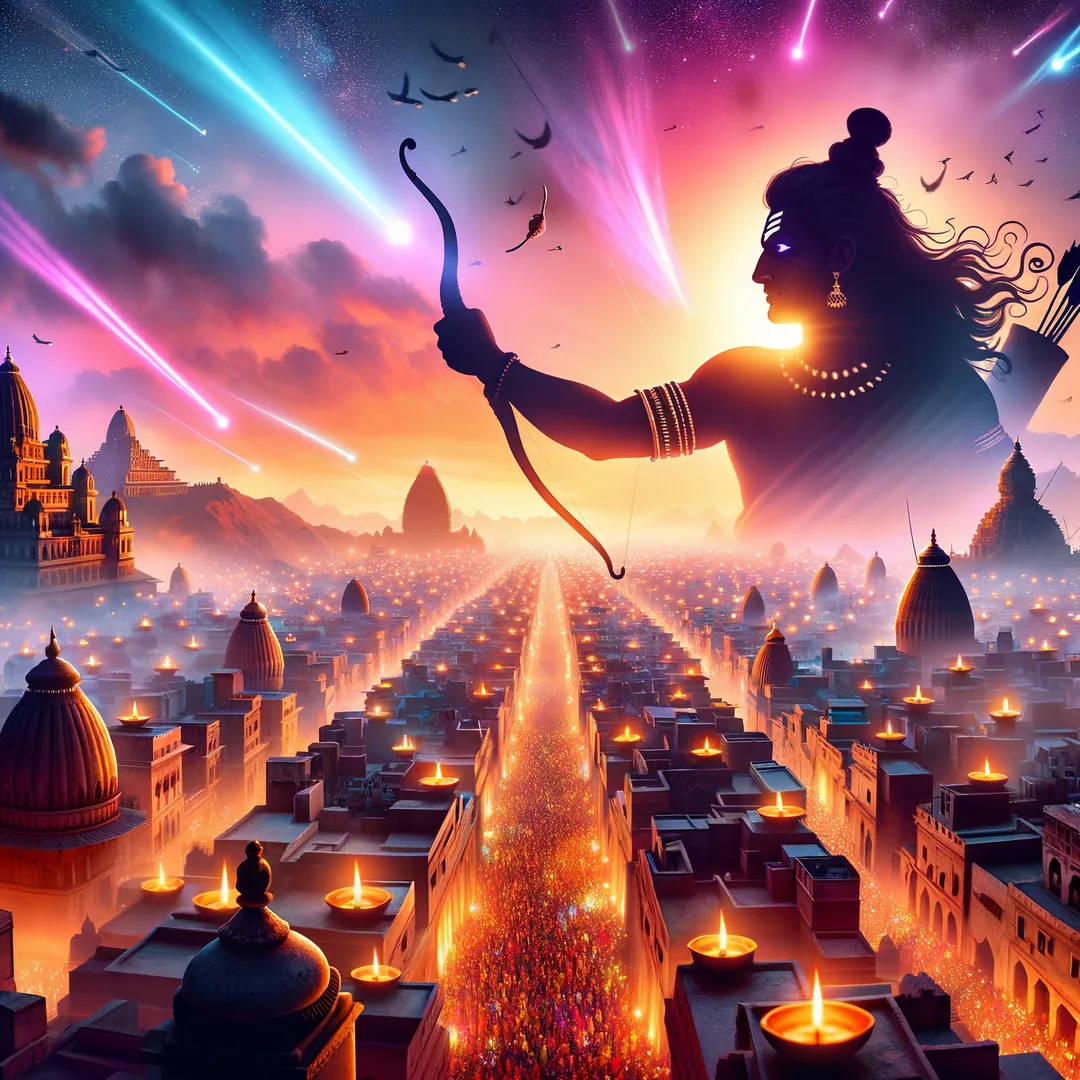
- Across North India Diwali is the night Ayodhya lit lamps to welcome Rama, Sita and Lakshmana home (practice)
Who keeps it, and regional forms
Across India
- Homes everywhere light lamps and worship Lakshmi; traders in Gujarat, Maharashtra and Rajasthan open new account books with Chopda or Bahi puja (practice)
- In Bengal, Assam and Odisha the same night is Kali Puja, which has its own page (practice)
- In much of the south the main celebration is the dawn oil bath of the day before (practice)
- In Gujarat the next day begins the new year (practice)
Other traditions
- Jains mark Mahavira's nirvana on this night, and Sikhs observe Bandi Chhor Divas, lighting lamps at gurdwaras (practice)
Alakshmi Nisaran
Introduction
- Alakshmi (Jyeshtha, or Daridra) is held to be the elder sister of Maa Lakshmi — the sign of poverty, quarrel, sloth and impurity.
- After Maa Lakshmi is welcomed on the evening of Deepavali, Alakshmi is driven out of the house the same night, at dawn before sunrise, so that Lakshmi stays in the home.
When
- On Deepavali night, after the Lakshmi puja — from the end of nishita until before sunrise, usually at dawn.
- (Muhurat: Alakshmi Nisaran – by city)
Who
- By tradition, the woman of the house or the eldest woman of the family.
What you need
- An old bamboo sup (winnowing basket)
- A stick, a piece of sugarcane or an old broom
- An old clay lamp, mustard oil and a wick
- A lota of Ganga jal or clean water
Get ready
- Rise before sunrise.
- Wash your hands and feet and bow before Maa Lakshmi.
- Fill the old lamp with mustard oil, light it and place it in the sup.
Start from the innermost room
- Begin at the innermost part of the house — the kitchen or the store room.
- Beat the sup with the stick or broom and say:
- "लक्ष्मी आएँ, दरिद्र जाए" (may Lakshmi come, may poverty go)
- "अन्न-धन-लक्ष्मी घर आवे, दलिद्दर बाहर जावे" (may grain, wealth and Lakshmi come home, may poverty go out)
Every room, every corner
- Beating the sup and saying the words, move through every room and every corner of the house towards the main door.
- Leave no corner out.
Mantra
- As you walk, say this mantra of the Shri Sukta:
- "क्षुत्पिपासामलां ज्येष्ठामलक्ष्मीं नाशयाम्यहम्। अभूतिमसमृद्धिं च सर्वां निर्णुद मे गृहात्॥"
- Meaning: may Jyeshtha, Alakshmi — hunger, thirst and impurity — be destroyed; may every want and every lack be driven from my home.
Leave it outside the house
- Take the sup and the lamp out of the house — to the edge of your home, the end of the lane or a crossroads.
- Set the sup and the lamp down there, or leave the old broom there.
Coming back
- Once it is left, do not look back.
- Come straight home, wash your hands and feet at the door and sprinkle Ganga jal on the main door.
Prayer to Maa Lakshmi
- Back inside, light a lamp before Maa Lakshmi and bow:
- "ॐ महालक्ष्म्यै नमः"
- "O Maa Lakshmi, stay in our home always."
Simple way
- If the sup custom is not part of your family's practice, keep one akhand (unbroken) lamp burning through the whole of Deepavali night.
- Let the house not stay dark — the light of the lamp is what keeps Alakshmi away.
Keep in mind
- This is a folk and family tradition — follow your own family's way.
- After leaving the old sup outside, many families bring a new sup home.
- In Uttar Pradesh and Bihar it is also called "दलिद्दर भगाना" (driving out poverty) or "सूप पीटना" (beating the sup).
Festive Food
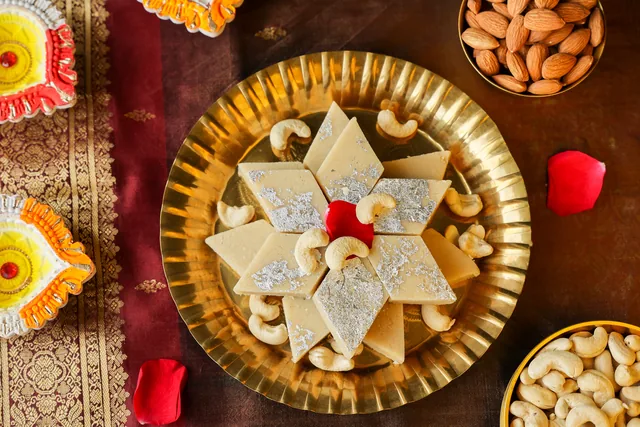 Kaju Katli (cashew fudge)Gulab JamunMotichur/Boondi LadduChakli / Murukku (savory spiral)Karanji / Gujiya (stuffed pastry)
History
Multiple sacred narratives converge on Diwali. Lord Rama, after defeating Ravana and rescuing Sita in Lanka, returned to Ayodhya on this Amavasya night after 14 years of exile. The citizens lit thousands of earthen lamps to welcome their beloved prince, turning the darkest night into the brightest. Goddess Lakshmi emerged from the cosmic ocean during the Samudra Manthan on this night and chose Vishnu as her consort. Lord Krishna and Satyabhama destroyed the demon Narakasura, freeing 16,100 imprisoned women — celebrated as Narak Chaturdashi the day before in South India. The Jain tradition observes it as the day Lord Mahavira attained final liberation.
Read more
Get Badi Diwali reminders for Barsāmi in Vandan
A reminder at the muhurat, the aarti to sing along, the katha to read.