
- AboharPunjab, India
- Abu DhabiAbu Dhabi, United Arab Emirates
- AhmedabadGujarat, India
- AjmerRajasthan, India
- AkleraRajasthan, India
- AklujMaharashtra, India
- AlandKarnataka, India
- AlwarRajasthan, India
- AmsterdamNorth Holland, Netherlands
- AnjangaonMaharashtra, India
- AshtaMadhya Pradesh, India
- AtlantaGeorgia, United States
- AucklandAuckland, New Zealand
- AuraiyaUttar Pradesh, India
- AzamgarhUttar Pradesh, India
- BaberuUttar Pradesh, India
- BagulaWest Bengal, India
- BandikuiRajasthan, India
- BandungWest Java, Indonesia
- BangkokBangkok, Thailand
- BarahiyaBihar, India
- BaripadaOdisha, India
- BarkheraUttar Pradesh, India
- BarnalaPunjab, India
- BegusaraiBihar, India
- BehrorRajasthan, India
- BengaluruKarnataka, India
- BeriHaryana, India
- BhavnagarGujarat, India
- BhilwaraRajasthan, India
- BhimavaramAndhra Pradesh, India
- BhopalMadhya Pradesh, India
- BhubaneswarOdisha, India
- BidhunaUttar Pradesh, India
- Bihar SharifBihar, India
- BikanerRajasthan, India
- BirminghamEngland, United Kingdom
- Boria KamalpurHaryana, India
- BostonMassachusetts, United States
- BrisbaneQueensland, Australia
- BulandshahrUttar Pradesh, India
- BurhanpurMadhya Pradesh, India
- CalgaryAlberta, Canada
- CelinaTexas, United States
- ChaibasaJharkhand, India
- ChandausiUttar Pradesh, India
- ChandigarhChandigarh, India
- Charkhi DadriHaryana, India
- CharlotteNorth Carolina, United States
- ChennaiTamil Nadu, India
- ChicagoIllinois, United States
- CoimbatoreTamil Nadu, India
- CookevilleTennessee, United States
- DahejGujarat, India
- DallasTexas, United States
- DatiaMadhya Pradesh, India
- DelhiDelhi, India
- DenpasarBali, Indonesia
- DeogharJharkhand, India
- DeoriaUttar Pradesh, India
- DetroitMichigan, United States
- DhanbadJharkhand, India
- DhandhukaGujarat, India
- DholpurRajasthan, India
- DohaDoha, Qatar
- DubaiDubai, United Arab Emirates
- DurbanKwaZulu-Natal, South Africa
- DuvvurAndhra Pradesh, India
- DwarkaGujarat, India
- EdisonNew Jersey, United States
- EdmontonAlberta, Canada
- FaizabadUttar Pradesh, India
- FarrukhabadUttar Pradesh, India
- FrankfurtHesse, Germany
- GandhidhamGujarat, India
- Ganj BasodaMadhya Pradesh, India
- GondalGujarat, India
- GuwahatiAssam, India
- HalwaraPunjab, India
- HaridwarUttarakhand, India
- HazaribaghJharkhand, India
- HisarHaryana, India
- Hong KongHong Kong, Hong Kong
- HoustonTexas, United States
- HyderabadTelangana, India
- IgatpuriMaharashtra, India
- IndoreMadhya Pradesh, India
- JabalpurMadhya Pradesh, India
- JaipurRajasthan, India
- JakartaJakarta, Indonesia
- JalandharPunjab, India
- JalesarUttar Pradesh, India
- JalgaonMaharashtra, India
- JalnaMaharashtra, India
- JamnagarGujarat, India
- JasidihJharkhand, India
- JawalamukhiHimachal Pradesh, India
- JindHaryana, India
- JodhpurRajasthan, India
- JohannesburgGauteng, South Africa
- KanpurUttar Pradesh, India
- KhambhatGujarat, India
- KhopoliMaharashtra, India
- KochiKerala, India
- KolkataWest Bengal, India
- Kuala LumpurFederal Territory, Malaysia
- KurundwadMaharashtra, India
- LeicesterEngland, United Kingdom
- LondonEngland, United Kingdom
- Los AngelesCalifornia, United States
- LucknowUttar Pradesh, India
- LudhianaPunjab, India
- MaduraiTamil Nadu, India
- MalkapurMaharashtra, India
- MaloutPunjab, India
- ManchesterEngland, United Kingdom
- MangaluruKarnataka, India
- MathuraUttar Pradesh, India
- MavliRajasthan, India
- MechanicsburgPennsylvania, United States
- MeerutUttar Pradesh, India
- MehsanaGujarat, India
- MelbourneVictoria, Australia
- MiamiFlorida, United States
- MinneapolisMinnesota, United States
- MississaugaOntario, Canada
- MogaPunjab, India
- MorbiGujarat, India
- MumbaiMaharashtra, India
- MurtajapurMaharashtra, India
- MuscatMuscat, Oman
- MysuruKarnataka, India
- NagpurMaharashtra, India
- NanduraMaharashtra, India
- NashikMaharashtra, India
- NeamatpurWest Bengal, India
- New YorkNew York, United States
- NippaniKarnataka, India
- NiraMaharashtra, India
- NowgongMadhya Pradesh, India
- OraiUttar Pradesh, India
- ParisÎle-de-France, France
- PatialaPunjab, India
- PatnaBihar, India
- PeddapalliTelangana, India
- PerthWestern Australia, Australia
- PhiladelphiaPennsylvania, United States
- PhoenixArizona, United States
- PrayagrajUttar Pradesh, India
- PuneMaharashtra, India
- PuriOdisha, India
- PutturKarnataka, India
- RaipurChhattisgarh, India
- RajamahendravaramAndhra Pradesh, India
- RajkotGujarat, India
- Ramgarh CantonmentJharkhand, India
- ReadingPennsylvania, United States
- RishikeshUttarakhand, India
- RiyadhRiyadh, Saudi Arabia
- SaharanpurUttar Pradesh, India
- San FranciscoCalifornia, United States
- San JoseCalifornia, United States
- SarupatharAssam, India
- SeattleWashington, United States
- SendhwaMadhya Pradesh, India
- ShikaripurKarnataka, India
- ShikarpurUttar Pradesh, India
- ShirdiMaharashtra, India
- SingaporeSingapore, Singapore
- SuratGujarat, India
- SurendranagarGujarat, India
- SydneyNew South Wales, Australia
- ThanesarHaryana, India
- TilakwadaGujarat, India
- TirupatiAndhra Pradesh, India
- TiruvannamalaiTamil Nadu, India
- TorontoOntario, Canada
- UdalguriAssam, India
- UjjainMadhya Pradesh, India
- UkiahCalifornia, United States
- UnjhaGujarat, India
- VadodaraGujarat, India
- VancouverBritish Columbia, Canada
- VaranasiUttar Pradesh, India
- VisakhapatnamAndhra Pradesh, India
- VisnagarGujarat, India
- VrindavanUttar Pradesh, India
- WanaparthyTelangana, India
- WashingtonDistrict of Columbia, United States
- ZurichZurich, Switzerland
Gopashtami
Aarti, mantra and katha
Each one opens the same screen in Vandan
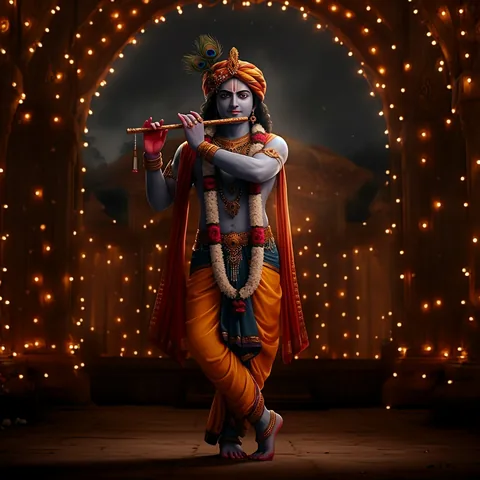
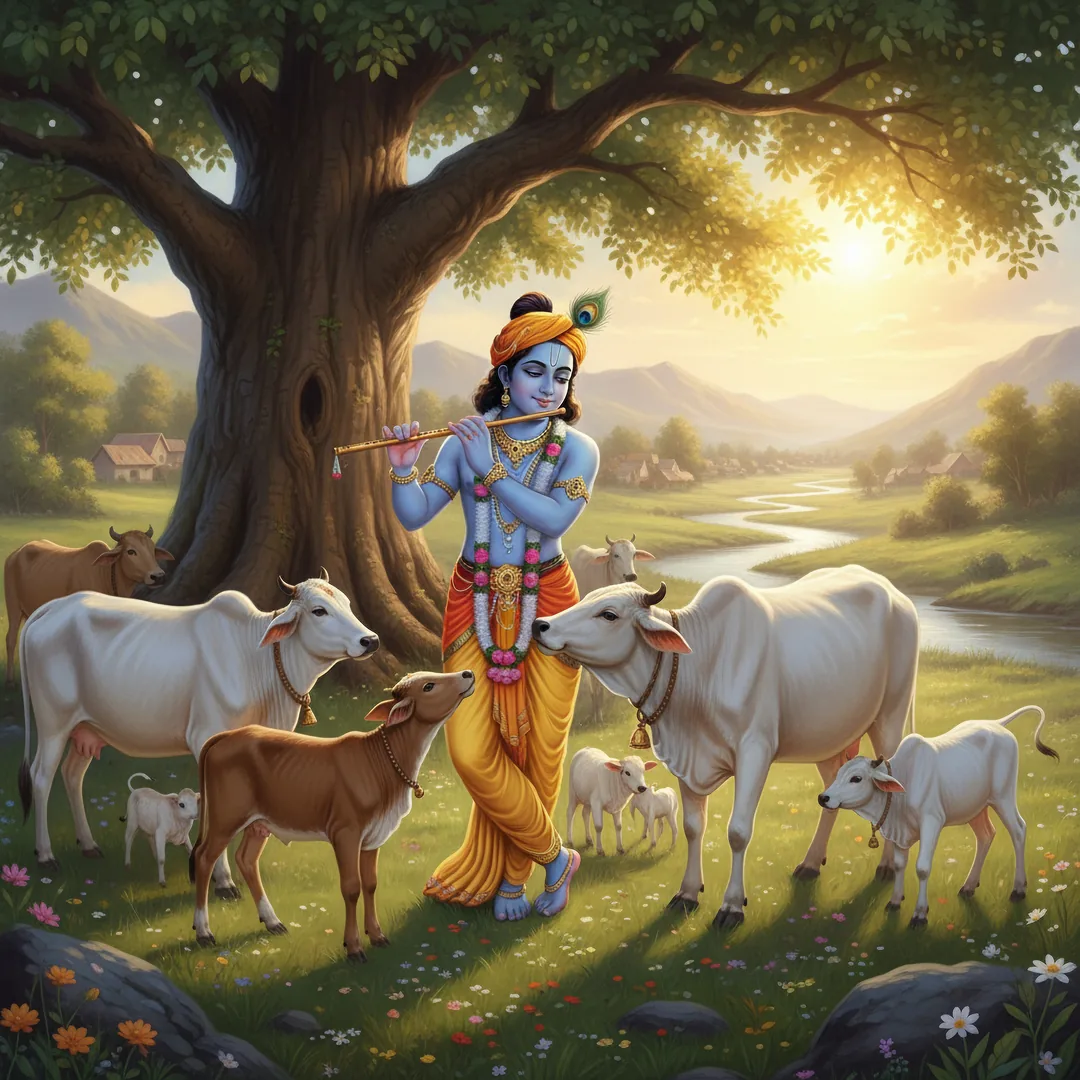
The day of the cow and of Krishna as cowherd. On Kartika's bright eighth, cows are worshipped, walked around and followed as they go out to graze. Families and gaushalas bathe and decorate the cows and calves, offer them fresh greens, jaggery and rotis, and worship Krishna with them. In the evening, as the herd returns, the cows are honoured again.
Samagri
Deity & setup
- Idol or picture of Shri Krishna
- Flute (bansuri)
- Idol or picture of a cow and calfwhen no cow is nearby
Bath & purification
- Gangajal
- Copper lota
- Panchamrit
Adornment & offerings
- Haldi (turmeric)
- Roli
- Mehndi
- Flower garland
- Clothes for the deity
- or Chunri
- Tulsi leaves
- Flowers
- Chandan (sandal paste)
- Akshat (unbroken rice)
- Kalava (mauli)
Lamp & incense
- Bell (ghanti)
- Dhoop (incense)
- Diya (lamp)
- Camphor (kapur)
Bhog
- Jaggery (gur)
- Roti
- Chana dal
- Bananas
- Makhan (white butter)
- Mishri (rock sugar)
- Kheer
- Fruit
- Sweets (mithai)
Daan
- Fodder, grain or money for a gaushala
Festival-specific
- Colour for the cow's horns
- Green fodder
Puja Vidhi
1. Gangajal and a copper lota 2. For the cow and calf – turmeric, roli, mehndi, a flower garland, a new cloth or chunri, a bell, colour for the horns 3. For the gau-gras (cow's morsel) – green fodder, jaggery, roti, chana dal, bananas 4. An idol or picture of Shri Krishna (Gopal), a flute 5. Tulsi leaves, yellow flowers, makhan-mishri 6. Roli, sandalwood, akshat, kalava, incense, a ghee lamp, camphor 7. Bhog – kheer, panchamrit, fruit, sweets 8. For daan – fodder, grain or money for a gaushala
Bathe before sunrise. If possible, add Gangajal to the water. Wear clean clothes.
Take water in your right palm and sip it three times: ॐ केशवाय नमः ॐ नारायणाय नमः ॐ माधवाय नमः Then wash your hands: ॐ हृषीकेशाय नमः
Sprinkle water over yourself and the puja samagri: ॐ अपवित्रः पवित्रो वा सर्वावस्थां गतोऽपि वा। यः स्मरेत् पुण्डरीकाक्षं स बाह्याभ्यन्तरः शुचिः॥
Light the ghee lamp: शुभं करोति कल्याणम् आरोग्यं धनसम्पदा। शत्रुबुद्धिविनाशाय दीपज्योतिर्नमोऽस्तु ते॥
Take water, akshat and a flower in your hand and say: "I, (name), of the (gotra) gotra, today on Kartik Shukla Ashtami, on the sacred occasion of Gopashtami, am worshipping Gau Mata and Gopal Shri Krishna for the happiness and prosperity of my family, for good health and for the growth of our wealth of cows."
Offer roli, akshat, durva and flowers: ॐ गं गणपतये नमः (three times)
Bathe the cow and calf. Apply a tilak of turmeric and roli on their foreheads, colour their horns, put a flower garland and a bell around their necks, and drape a new chunri or cloth over their backs.
Offer water at the cow's feet. Then worship her with roli, akshat, flowers, incense and the lamp: नमो गोभ्यः श्रीमतीभ्यः सौरभेयीभ्य एव च। नमो ब्रह्मसुताभ्यश्च पवित्राभ्यो नमो नमः॥
Feed the cow green fodder, jaggery, roti and chana dal with your own hands: सुरभि त्वं जगन्माता देवी विष्णुपदे स्थिता। सर्वदेवमये ग्रासं मया दत्तमिदं ग्रस॥
Do seven parikramas of the cow. With each parikrama, say: गावो ममाग्रतः सन्तु गावो मे सन्तु पृष्ठतः। गावो मे हृदये सन्तु गवां मध्ये वसाम्यहम्॥ After the parikrama, touch the dust of the cow's feet to your forehead.
Bathe the idol or picture of Shri Krishna with panchamrit and clean water (for a picture, sprinkle it). Offer yellow clothes, sandalwood, tulsi leaves, yellow flowers and the flute. Offer a bhog of makhan-mishri and kheer: ॐ गोपालाय नमः कृष्णाय वासुदेवाय हरये परमात्मने। प्रणतक्लेशनाशाय गोविन्दाय नमो नमः॥
As tradition holds, honour the cowherd or gau-sevak who looks after the cows by applying a tilak and giving clothes or dakshina.
Perform the aarti "Aarti Kunj Bihari Ki" and the aarti of Gau Mata. At the end: कर्पूरगौरं करुणावतारं संसारसारं भुजगेन्द्रहारम्। सदा वसन्तं हृदयारविन्दे भवं भवानीसहितं नमामि॥
In the evening, when the cows return from grazing, welcome them again with a tilak, show them the lamp and feed them jaggery.
आवाहनं न जानामि न जानामि विसर्जनम्। पूजां चैव न जानामि क्षमस्व परमेश्वर॥ Then distribute the prasad.
Guide
Rules of Gopashtami
- Do not cause Gau Mata any kind of hardship on this day.
- Do not eat yourself before feeding the cow.
- Eat sattvik food – avoid onion, garlic and non-vegetarian food.
- Donate fodder, grain or money to a gaushala as your means allow.
Gopashtami abroad
- If there is no cow nearby, worship an idol or picture of Gau Mata and her calf at home, and worship them together with Shri Krishna.
- Visit a nearby temple or gaushala and serve the cows.
- Donate to a gaushala for fodder.
- Do the puja by the local time of your city.
Festive Food
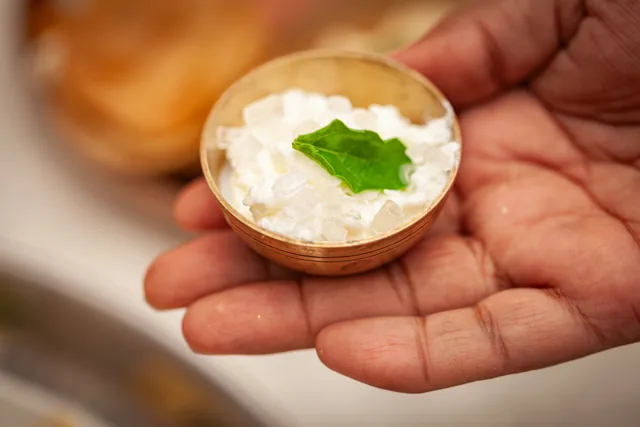 Makhan-mishri
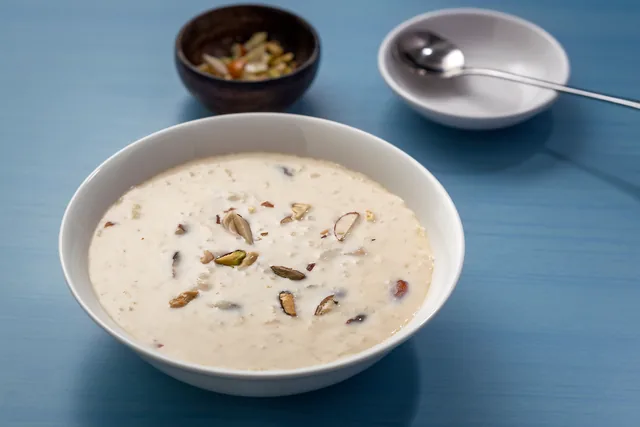 Kheer
History
Braj tradition holds that this was the day Krishna and Balarama, grown past early boyhood, were first sent out to herd the cows themselves rather than the calves. The village honoured the cows and the young gopas together, and the day kept the name Gopashtami. The story of Krishna reaching that age and taking the herds to Vrindavan's forest names no date; the date is the tradition's. The rite of the day is worshipping, circling and following the cows.
Read more
Get Gopashtami reminders for Sonbarsa in Vandan
A reminder at the muhurat, the aarti to sing along, the katha to read.